Blog/Promo Items
Side by Side
Branded apparel: screen printing vs. embroidery vs. heat transfer
Three ways to put a logo on a garment. How they differ in durability, detail and cost, and which one I would use for uniforms, events and giveaways.
Use embroidery for uniforms and anything that should look premium. Use screen printing for t-shirts in quantity. Use heat transfer for small orders, full-color designs and individual names.
When a company orders shirts, the conversation usually starts with the color of the shirt. I think it should start with the decoration method. It determines how the logo will look, how long it will last and what the order will cost.
There are three methods that cover almost every apparel order. Each one is the right answer for a different kind of garment.
Screen printing
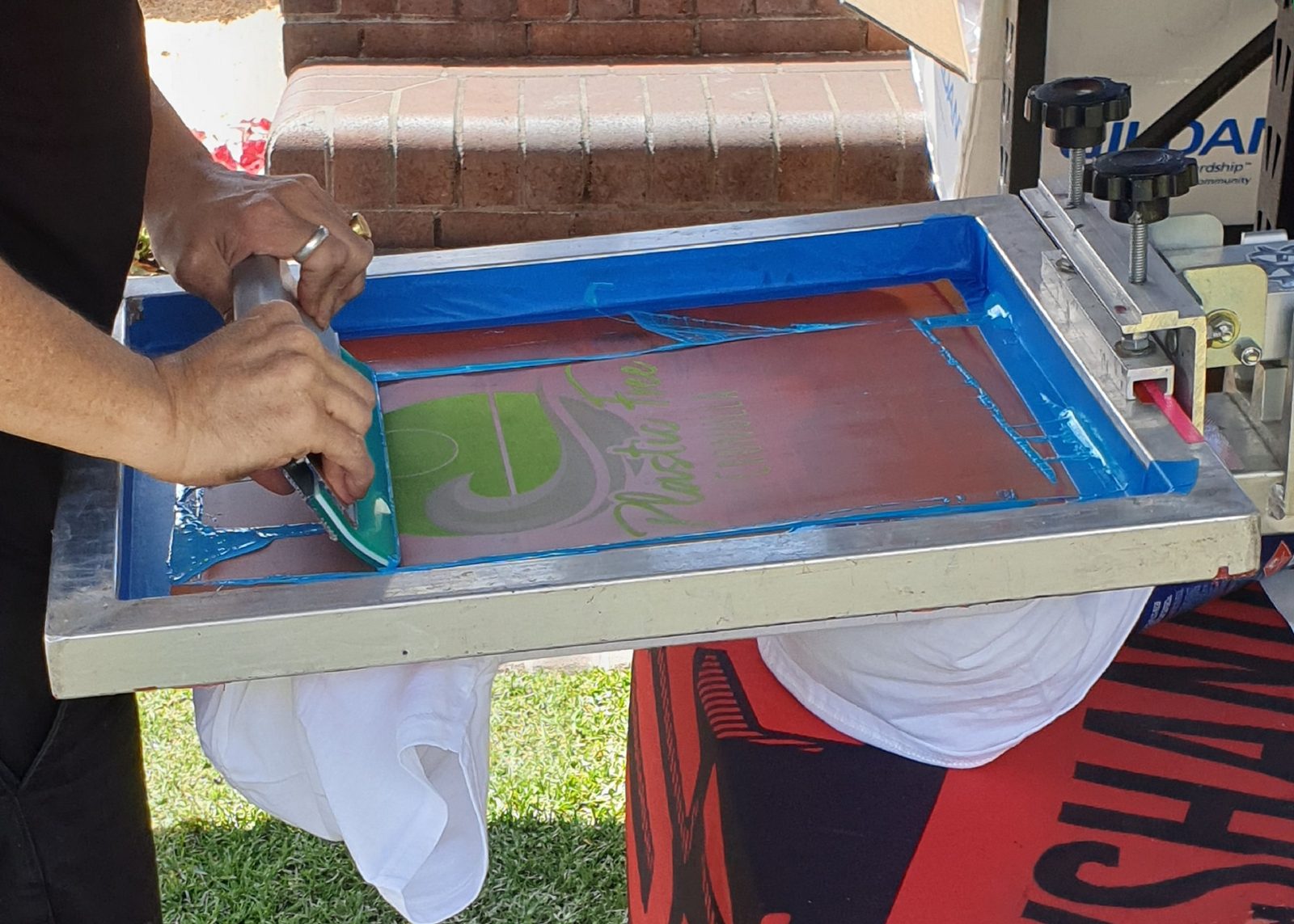
- Ink is pressed through a mesh screen onto the fabric
- One screen for each color in the design
- Bold, solid color that holds up to washing
- Most economical in larger quantities
Embroidery
- The logo is stitched with thread
- A raised, textured, premium finish
- Very durable
- Best on polos, caps and jackets
Screen printing
Screen printing is the standard method for t-shirts. Each color in the design needs its own screen, and preparing the screens is a fixed cost. That is why the price per shirt drops as the quantity goes up, and why a one-color design costs less than a four-color one.
It gives strong, solid color and it lasts. It is the method I recommend for events, teams and any order of t-shirts in quantity. It is less practical for a handful of shirts or for designs with photographs and many colors.
Embroidery
Embroidery stitches the logo into the garment with thread. The result has texture and weight, and it reads as quality. For staff uniforms, an embroidered logo on the left chest of a polo is the standard for a reason: it looks professional and it outlasts the shirt.
It has limits. Very small text does not stitch cleanly, and gradients and fine detail have to be simplified. It also works best on fabrics with some structure. On thin t-shirt material, the stitching can pull the fabric.
Heat transfer
In heat transfer, the design is printed or cut separately and then applied to the garment with heat and pressure. Because nothing has to be set up for each color, it handles full-color artwork and photographs, and it is practical for small quantities.
It is also the method for individual names and numbers, where every piece is different. The trade-off is durability. A transfer generally does not withstand years of heavy washing as well as screen printing or embroidery.
Side by side
| Factor | Screen printing | Embroidery | Heat transfer |
|---|---|---|---|
| Best garments | T-shirts, sweatshirts | Polos, caps, jackets | T-shirts, sportswear |
| Look | Flat, bold color | Raised and textured | Flat, full color |
| Fine detail | Good | Limited | Very good |
| Photographs and gradients | Difficult | No | Yes |
| Durability | High | Highest | Moderate |
| Small quantities | Less economical | Practical | Most practical |
| Large quantities | Most economical | Cost follows the size of the design | Less economical |
Which one I would choose
- Staff uniforms: embroidery on polos. It is worth the difference.
- Event and team t-shirts: screen printing, with the design kept to one or two colors.
- Giveaway shirts: screen printing. Quantity is the point, and a simple design gets worn more.
- A few shirts, or a full-color design: heat transfer.
- Names and numbers: heat transfer, combined with either of the other two for the logo.
What to have ready before you order
- A vector logo, and a one-color version of it. Both will be needed.
- The garment color. A logo designed for a white background may need adjusting for a dark shirt.
- The placement: left chest, full front, back or sleeve.
- The sizes. Collect them from the people who will wear the garments. Guessing produces a box of shirts nobody can use.
- The date. Apparel has to arrive blank before it is decorated, so it needs more time than paper.
My general advice is to simplify. A clean logo in one or two colors looks better on fabric than a complex one, with any of the three methods. Send us the logo, the type of garment, the quantity and the date, and we will recommend the method that fits.