Blog/Offset
Step-by-Step Guide
Letterhead, envelopes and forms: building a consistent stationery set
Lay all your printed pieces on one table and count the versions of your logo. Then follow these steps to make them look like one company.
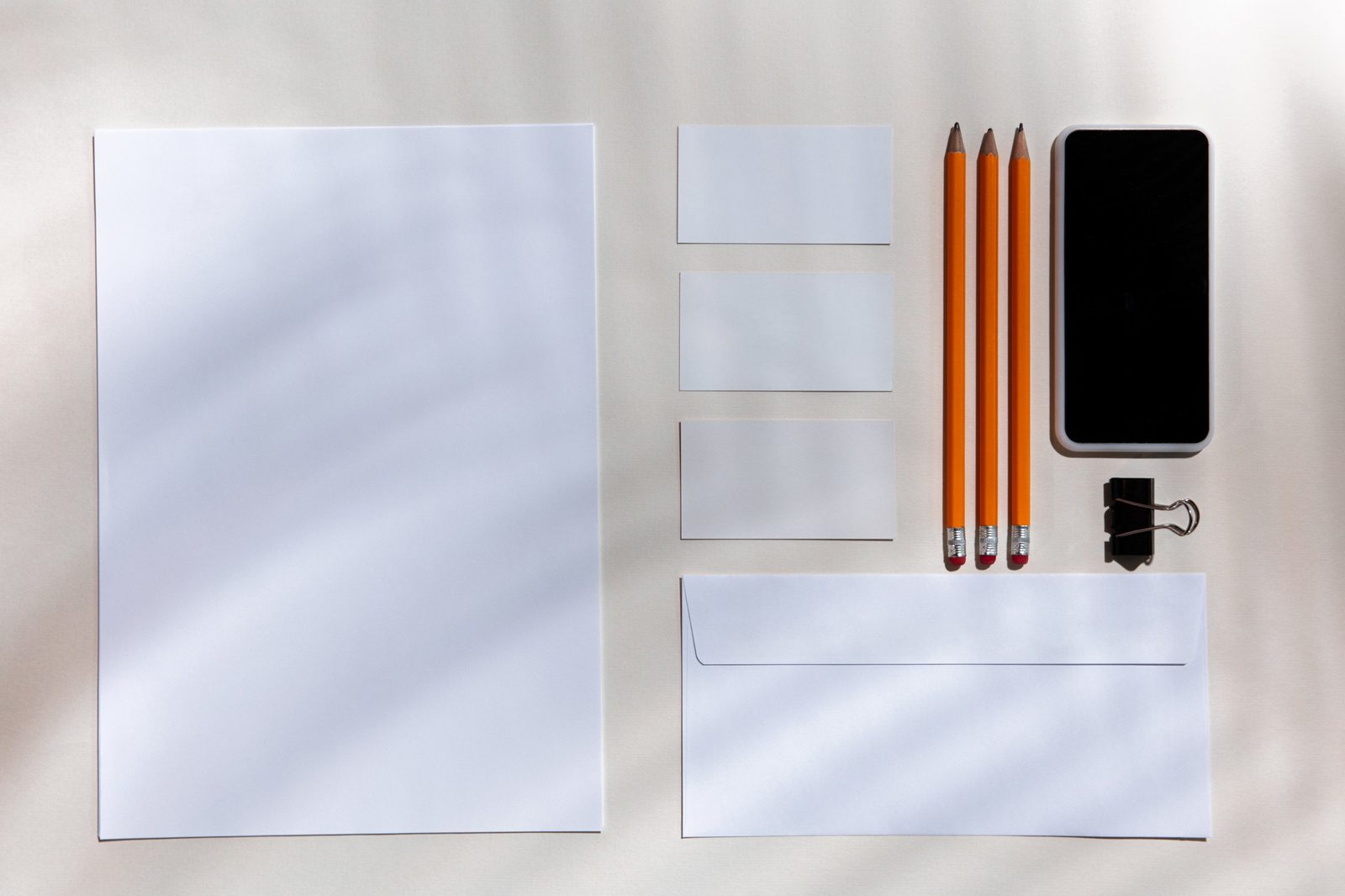
Try this experiment. Collect one of every printed piece your company uses and lay them on a table: letterhead, envelopes, business cards, invoices, notepads, folders. Now count the versions of your logo. If the answer is one, you may skip this post and enjoy your day. If the answer is four, plus two shades of blue and a fax number, welcome. You are among friends.
It happens to almost every company, and nobody did it on purpose. Pieces get ordered years apart, by different people, from whatever file was closest. Here is how to bring them back together.
Put everything on the table
Do the experiment for real. Gather every printed piece currently in use, including the ones hiding in the warehouse and the reception drawer. Check each one for the logo version, the color, the address, the phone numbers and the website.
Make two piles: correct and outdated. The outdated pile is usually taller. That is fine. Now you know.
Choose the official version of everything
Before reprinting anything, decide what is correct. You need four things:
- One logo file, in vector format. Not the one from the email signature.
- One color definition. Our post on Pantone and CMYK explains how to record it.
- One or two typefaces.
- One address block, written the same way everywhere, with the phone numbers that people still answer.
Design the letterhead first
The letterhead sets the rules for everything else, so it goes first.
- Leave room for the letter. The letterhead is not the letter. A logo, a line of contact details and generous margins are enough.
- Choose paper that works in your office. Letterhead goes through your own printer and gets signed with a pen, so it should be an uncoated stock. See paper weights and finishes.
- Test it. Print a real letter on a sample before approving the full run. This is how you discover that the footer sits exactly where your printer refuses to print.
Match the envelopes
Envelopes should look like they came from the same company as the letter inside them, which sounds obvious and is violated daily. Use the same logo and the same ink color, and keep the design in the top left corner, where the return address belongs.
Decide whether you need window envelopes for invoices and statements. If so, the address on your documents has to line up with the window. Test that with a real invoice too.
Bring the cards, notepads and folders into line
Business cards are printed on a different paper, but the logo, the color and the address block should match the letterhead exactly. The same goes for notepads and presentation folders. Our guide to business cards covers the card itself.
Do not forget the forms
Invoices, work orders and delivery receipts are the pieces your customers actually keep, and they are usually the oldest design in the building. Give them the current logo and the current address. If you use multi-part forms, see NCR and carbonless forms for what to specify when you reorder.
Write the spec sheet
This is the step that keeps you from repeating the experiment in five years. For each piece, write down the paper, the ink colors, the size and the quantity you ordered. One page is enough.
Then reorder from the spec sheet, not from memory. "The same as last time" is a perfectly good instruction only when somebody knows what last time was.
Why print the set together
When the whole set is specified together, the color is defined once and every piece is matched to it. Stationery is typically printed on offset with a spot color for exactly that reason: the blue on the envelope is the blue on the letterhead, this year and next.
A digital companion. Ask your designer for a letterhead template for your word processor that matches the printed version. Letters sent as PDF should look like the ones sent on paper.
If your table experiment produced more versions than you would like to admit, send us photos of what you have. We will help you turn the pile into one consistent set. The fax number can retire with dignity.