Blog/Print Tips
Step-by-Step Guide
Paper weights and finishes explained
Why 80 lb paper can be thin or thick, what gloss and matte really change, and which paper suits cards, flyers and brochures.
Paper is the only product I know where "80 pounds" can describe two completely different things, and both are correct. If you have ever read a print quote, seen "100 lb gloss text" and nodded as if that meant something, this post is for you. No judgment. Our industry invented this confusion and then acted surprised when nobody understood it.
The good news is that you only need a handful of ideas to order paper with confidence. Here they are, in the order they usually come up.
Learn the two families: text and cover
Almost every paper we print on belongs to one of two families.
- Text stock is paper. It is flexible and folds easily. Flyers, brochures, letterhead and the inside pages of a booklet are printed on it.
- Cover stock is card. It is thicker and stiffer. Business cards, postcards, presentation folders and booklet covers are printed on it.
A quick test: if you can roll it into a tube without effort, it is text. If it fights back, it is cover.
Read the number without getting fooled
The weight on a quote, such as 80 lb or 100 lb, comes from weighing 500 large sheets of that paper. The catch is that text papers and cover papers are weighed at different sheet sizes. So 80 lb text and 80 lb cover are not the same thing. One is a nice flyer. The other is a business card.
I did not design this system. I can only apologize for it.
Inside one family, the rule is simple: a higher number means a thicker, heavier sheet. You may also run into two other measurements. Card is sometimes described by thickness in points, where one point is a thousandth of an inch. And "gsm" means grams per square meter, the metric system's much more sensible answer: one scale for every paper, and the bigger number is always the heavier sheet.
The one rule to remember. Always read the number and the family together, and never compare a text number with a cover number.
Pick the surface: gloss, matte or uncoated
The finish changes how the piece looks, how it feels and whether a pen will cooperate with it.
- Gloss has a shiny coating. Photos look sharp and colors look vivid. It also reflects light and resists ink from a pen.
- Matte, sometimes called dull or silk, is coated but has very little shine. Long text is easier to read on it, and it tends to look more understated.
- Uncoated has no coating at all. It feels natural, colors come out a little softer, and it is the one you can write on, stamp and run through an office printer.
If someone is going to write on the piece, do not choose gloss. Ask anyone who has signed a glossy card and walked away with a blue thumb.
Match the paper to the job
These are starting points, not laws, but they will get you most of the way there.
- Flyers and handouts: gloss or matte text. Go up in weight when the piece needs to feel more substantial.
- Brochures: a heavier text stock or a light cover. Thick stocks need to be scored, meaning creased by machine before folding, so the fold does not crack.
- Business cards and postcards: cover stock, thick enough to survive a wallet or the mail.
- Letterhead and envelopes: uncoated text, so they accept a signature and a trip through your office printer.
- Menus and anything handled all day: cover stock, and ask about a protective finish.
Then ask four questions about the piece. Will it be folded? Mailed? Written on? Handled a hundred times? Each answer rules out a few papers, which is exactly what you want.
Touch it before you decide
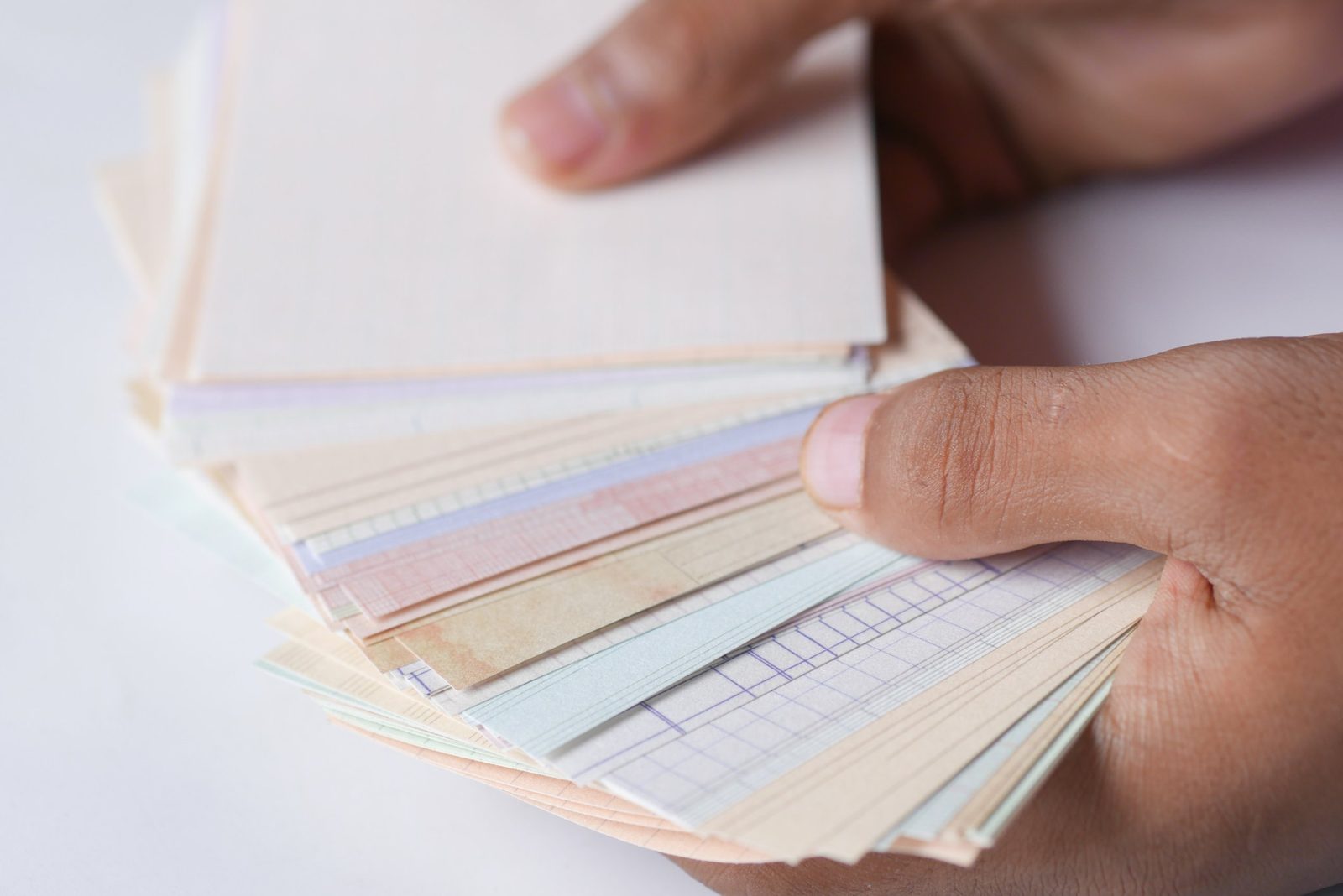
Paper is a physical thing, and no screen has ever managed to explain how a sheet feels. Before a job of any size, ask to see and hold the actual stock. If you already have a printed piece you like, from us or from anywhere else, bring it. Matching something you can hand us is much easier than matching "like the last one, but nicer."
And if all of this still sounds like a lot, here is the shortcut: tell us what the piece is, how it will be used and the impression you want it to make, and we will recommend the paper. You never have to say "100 lb gloss text" out loud. Although now you can, and I think you should, at least once.