Blog/Signage
Wayfinding signs: helping visitors find their way
If your front desk gives directions all day, your building is trying to tell you something. Good directional signs answer the question first.
Here is a quick test. Count how many times a day someone at your front desk says "down the hall, second door on the left." If the answer is more than a handful, congratulations: you already have a wayfinding system. It has a name, a lunch break and other work to do.
Wayfinding is the unglamorous side of signage. Nobody posts a photo of an arrow that says "Radiology." But it is the difference between a visitor who arrives calm and on time and one who has toured your entire second floor by accident.
What wayfinding actually is
A wayfinding system is a set of signs that answers four questions, in order: Where am I? Where is the place I need? How do I get there? Am I there yet?
Different signs handle different questions:
- Identification signs name a place: the building, the suite, the door.
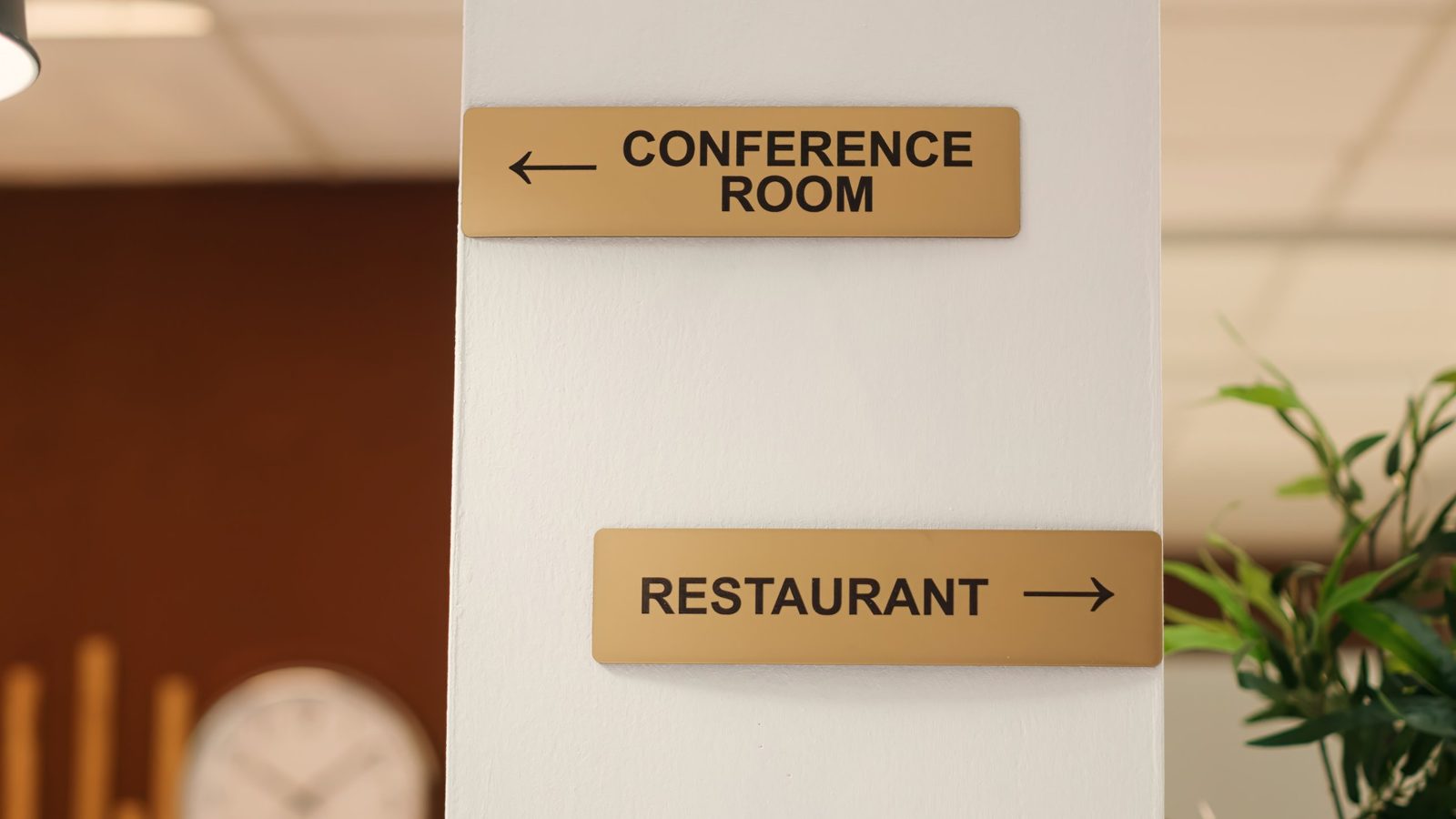
- Directional signs point the way, usually with arrows.
- Informational signs give context: a directory in the lobby, a floor map, office hours.
- Regulatory signs set limits: staff only, no entry, visitors must check in.
Most buildings have the first kind and very little of the second. That is how you end up with a beautifully labeled door that nobody can find.
Where it matters most
Any place that receives people who have never been there before. Medical offices and clinics, where patients often arrive worried, late or both. Office buildings with several tenants. Shopping centers, schools and government offices. Warehouses that receive delivery drivers. And parking areas, where the adventure usually begins.
What good directional signs have in common
- They are placed where decisions happen. Entrances, elevator lobbies, stair landings and corridor intersections. A sign in the middle of a long hallway confirms a decision. A sign at the corner makes it.
- They use one name for each place. If the lobby directory says "Billing," the arrow cannot say "Finance" and the door "Accounts Receivable." Pick one. Your visitors did not come to solve a crossword.
- They can be read while walking. Large letters, strong contrast, simple type and very few words.
- Their arrows are consistent. The same arrow style, in the same position, on every sign. An arrow pointing up means straight ahead, not "it is on the ceiling."
- They speak the visitor's language. In Puerto Rico that often means Spanish and English. Decide which goes first and keep that order on every sign.
A good sign answers the question before anyone has to ask it.
The stranger test
You cannot evaluate your own building. You know where everything is, so every sign looks perfectly clear to you. You need a stranger.
Ask someone who has never visited, such as a friend, a new employee or a relative who owes you a favor, to find a specific room starting from the parking lot. Then follow a few steps behind and say nothing. This is harder than it sounds.
Write down every spot where the person stops, slows down or looks around. Each of those is a missing sign, a sign in the wrong place or a sign nobody can read. In ten minutes you will have a better plan than most consultants could write from a floor plan.
A note about the signs beside the doors
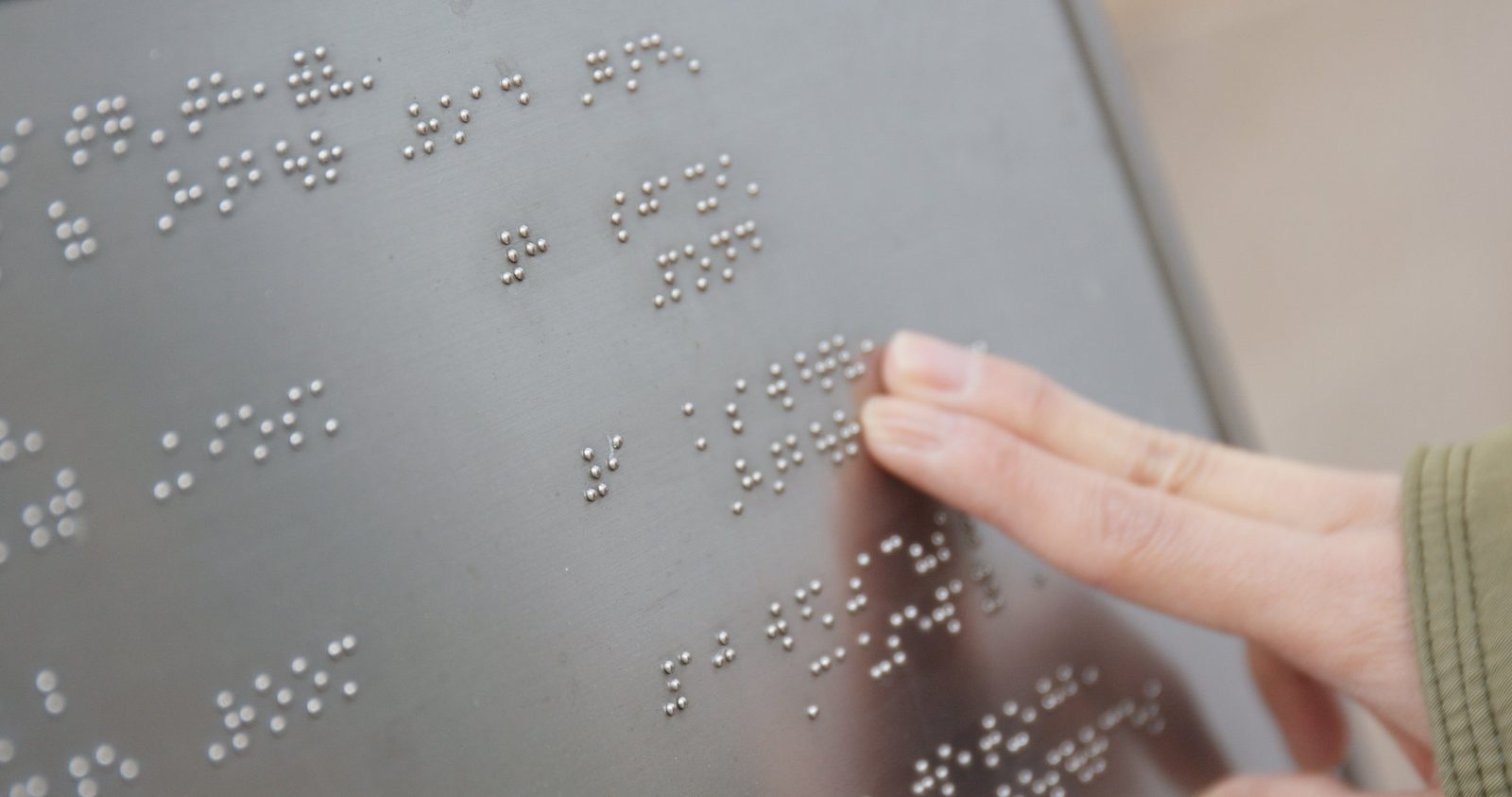
Directional signs have a lot of design freedom. The signs that identify permanent rooms have less: they fall under ADA rules for raised lettering, braille and mounting height. I covered those in ADA signage basics, and it is worth planning both kinds together so the building looks like one system and not three generations of signs having an argument.
You do not have to redo the whole building
Start with the entrance and the three destinations people ask about most. For many offices that is reception, the restrooms and one busy department. Fix those routes first. If the questions at the front desk drop, you will know it worked, and so will the person at the front desk.
What to send us. A floor plan or a few photos of the main routes, and a list of the destinations visitors look for. A phone video of the walk from the entrance works surprisingly well.
If your walk-through turns up more confusion than you expected, send us the list and we will help you turn it into a sign plan. Your receptionist will thank you. Possibly with coffee.