Blog/Digital
Side by Side
Tri-fold, bi-fold or gate fold: which brochure works best?
The fold decides how a brochure organizes information and the order in which it is read. How the three most common folds compare.
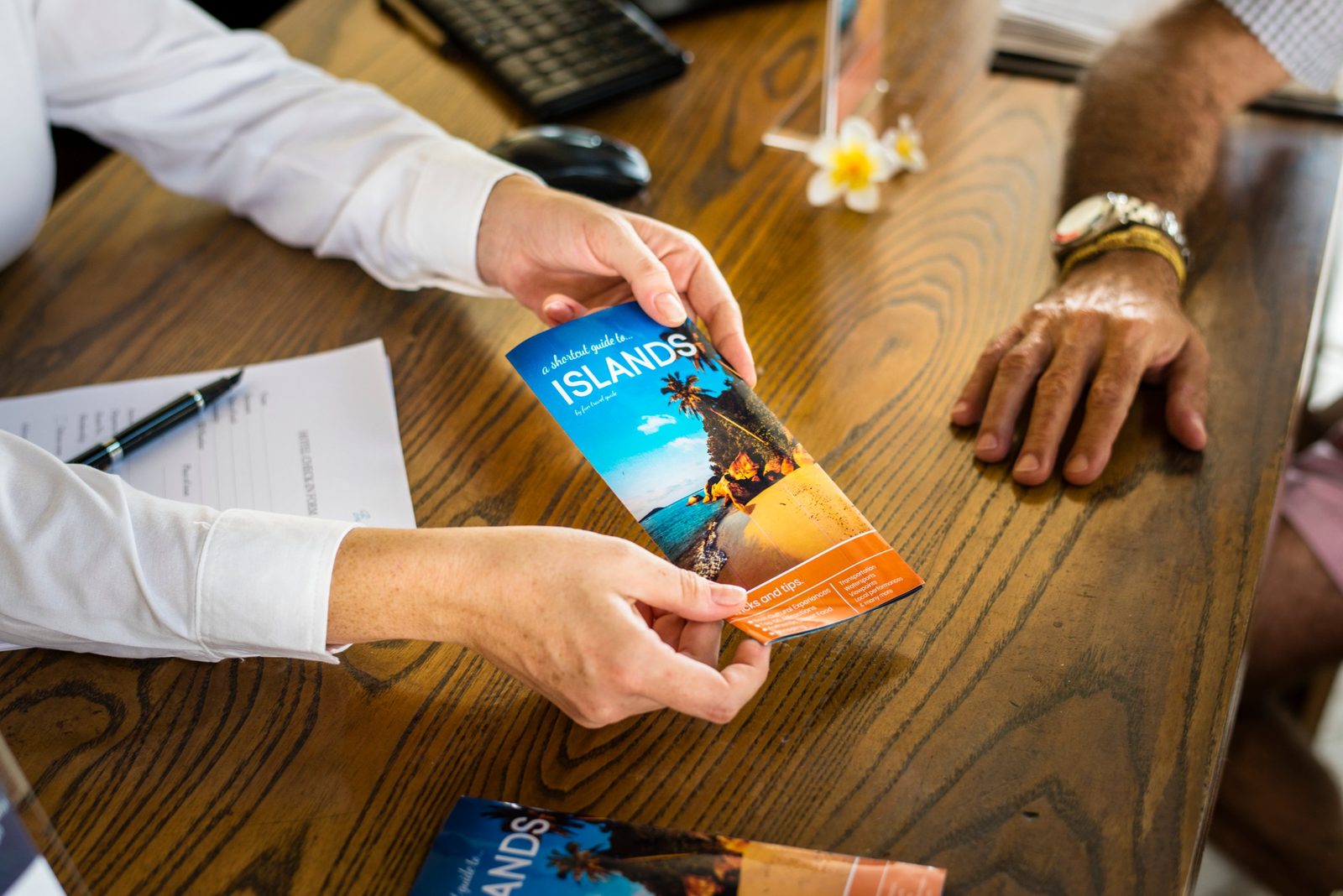
A tri-fold suits a list of services read in sequence. A bi-fold suits fewer, larger sections, such as a menu or a product sheet. A gate fold suits one large image or an announcement that benefits from a reveal.
The fold of a brochure is often chosen last, after the text and images are ready. It is more useful to choose it first. The fold determines how many panels are available, how large each one is and the order in which a reader sees them.
Three folds cover most brochure projects. Each one organizes information in a different way.
Bi-fold
- Opens like a small booklet
- Large panels with room for images
- Simple to design and to read
- Suits menus, programs and product sheets
Tri-fold
- Folds into thirds
- Six narrow panels, read one at a time
- Fits a standard envelope and a brochure rack
- Suits service lists and step-by-step information
Bi-fold
A bi-fold is a sheet folded once down the middle. It has four panels: a front cover, two inside panels that are seen together and a back cover.
The panels are large, so the format works well for photographs, tables and menus. Readers understand it immediately, because it opens like a book. It is a sound choice when the content divides into two or three main sections.
Tri-fold
A tri-fold is a sheet folded twice into three equal sections, which gives six panels. It is the format most people have in mind when they think of a brochure.
Made from a letter-size sheet, it fits a standard business envelope and the display racks found in offices and reception areas. The narrow panels suit short blocks of information presented in order: who we are, what we offer, how it works and how to contact us.
A detail that matters. The panel that folds to the inside must be slightly narrower than the other two, or the brochure will not close flat. The file should be prepared with this difference from the beginning.
Gate fold
In a gate fold, the two outer panels fold inward and meet at the center, like a pair of doors. The reader opens both to reveal one wide interior.
This fold is effective when there is a single strong image or message to present: a product launch, an invitation, a property or a new location. It requires more precise design and folding, because the two outer panels must meet accurately, and for that reason it generally costs more than the other two.
Side by side
| Factor | Bi-fold | Tri-fold | Gate fold |
|---|---|---|---|
| Folds | One | Two | Two |
| Panels | Four, large | Six, narrow | Two narrow flaps and a wide center, on each side |
| How it is read | Like a booklet | Panel by panel, in order | Opens to one wide spread |
| Best for | Menus, programs, product sheets | Service lists, guides, general information | Launches, invitations, one main image |
| Envelope and rack (letter size) | Needs a larger envelope | Fits both | Depends on the final size |
| Design and production | Simplest | Moderate | Most demanding |
How to choose
We suggest starting with the content and the way the brochure will be distributed.
- Count the sections. Two or three large sections point to a bi-fold. Five or six short ones point to a tri-fold. One dominant image points to a gate fold.
- Consider how it will be delivered. A brochure that will be mailed in a standard envelope or placed in a rack should be a tri-fold.
- Consider the amount of text. Narrow panels work with short paragraphs. Long text needs wider panels.
A simple test helps: fold a sheet of paper by hand, number the panels in the order a reader will see them and write on each one what it will contain. Most problems with a layout appear at that stage, before any design work begins.
Paper and file preparation
Heavier papers should be scored before folding so that the fold does not crack, particularly where there is solid color across it. Text and logos should be kept away from the fold lines. Our posts on paper weights and finishes and print-ready files explain both points.
If you are planning a brochure, request a quote and tell us what it will contain and how it will be distributed. We can recommend a fold and provide the panel measurements for your designer.